



The History of Space Photography

An infrared image from NASA's Spitzer Space Telescope shows the Helix nebula. The white dwarf star is visible as a tiny white dot in the center of the picture. The red color in the middle of the eye denotes the final layers of gas blown out when the original star, that created the nebula, died. 2007 (NASA/JPL-Caltech/University of Arizona)

This exhibition reveals the fantastic variety of outer-space photography from the early 1800s until today. On display are the most important images from the 19th, 20th, and 21st centuries: photographs of the earth from space, photographs of our solar system and the stars, the Milky Way, and the universe far beyond our solar system. In addition, three projected showings of photographs and videos are involved related to the three main divisions of the exhibition.
The oldest science
Since the beginning of human life we've stared up at the sky. Early civilizations such as that of ancient Greece studied the night sky with the unaided eye. This led to astronomy, the oldest science.
Photography - a revolution in astronomy
The invention of the telescope in the 1600s enabled astronomers such as Galileo to learn in more detail about the sky's fantastic objects. Astronomers who wanted to document what they saw had to produce detailed drawings by hand. With the discovery of photography in the 1830s, astronomers had a chemical process that could delineate the masses of heavenly bodies and events they saw. These images allowed photographers to study their own or other investigators' observations precisely and without time pressures. The pictures led to a revolution in astronomy.

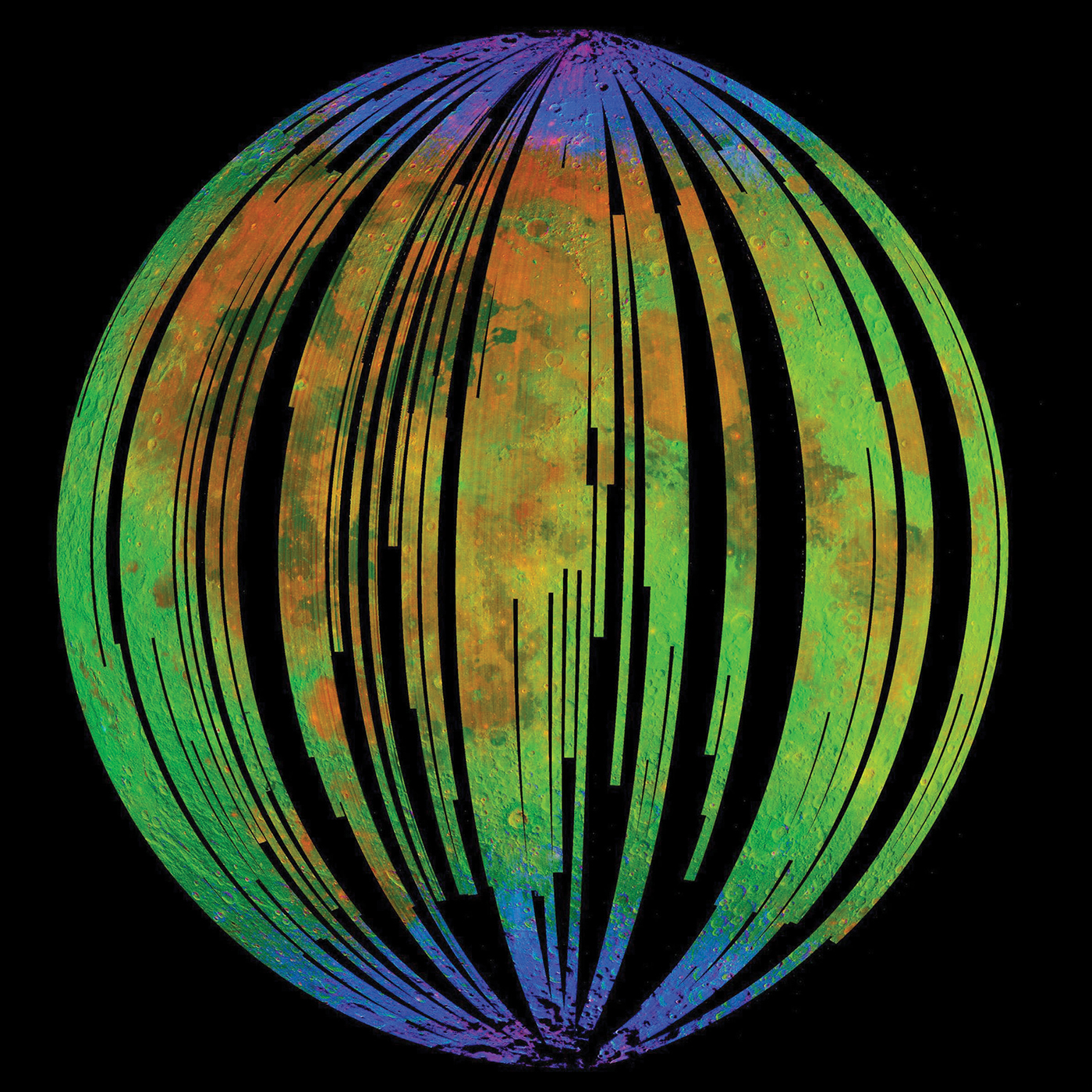



Denne kartleggingen av Månen er foretatt av NASAs Moon Mineralogy Mapper, et instrument om bord på den indiske romorganisasjonens Chandrayaan 1-fartøy, i perioden 22. oktober 2008 – 29. august 2009. Bildet viser med kunstige farger hvordan ulike materialer er fordelt over den siden av Månen som vender mot Jorden. Små mengder vann ble detektert på overflaten (blått). Grønt viser intensiteten på reflektert infrarød stråling (varmestråling) fra Solen og rødt viser forekomster av det jernrike mineralet pyroksen.
Lambdatrykk (ISRO/NASA/JPL-Caltech/Brown University/USGS)
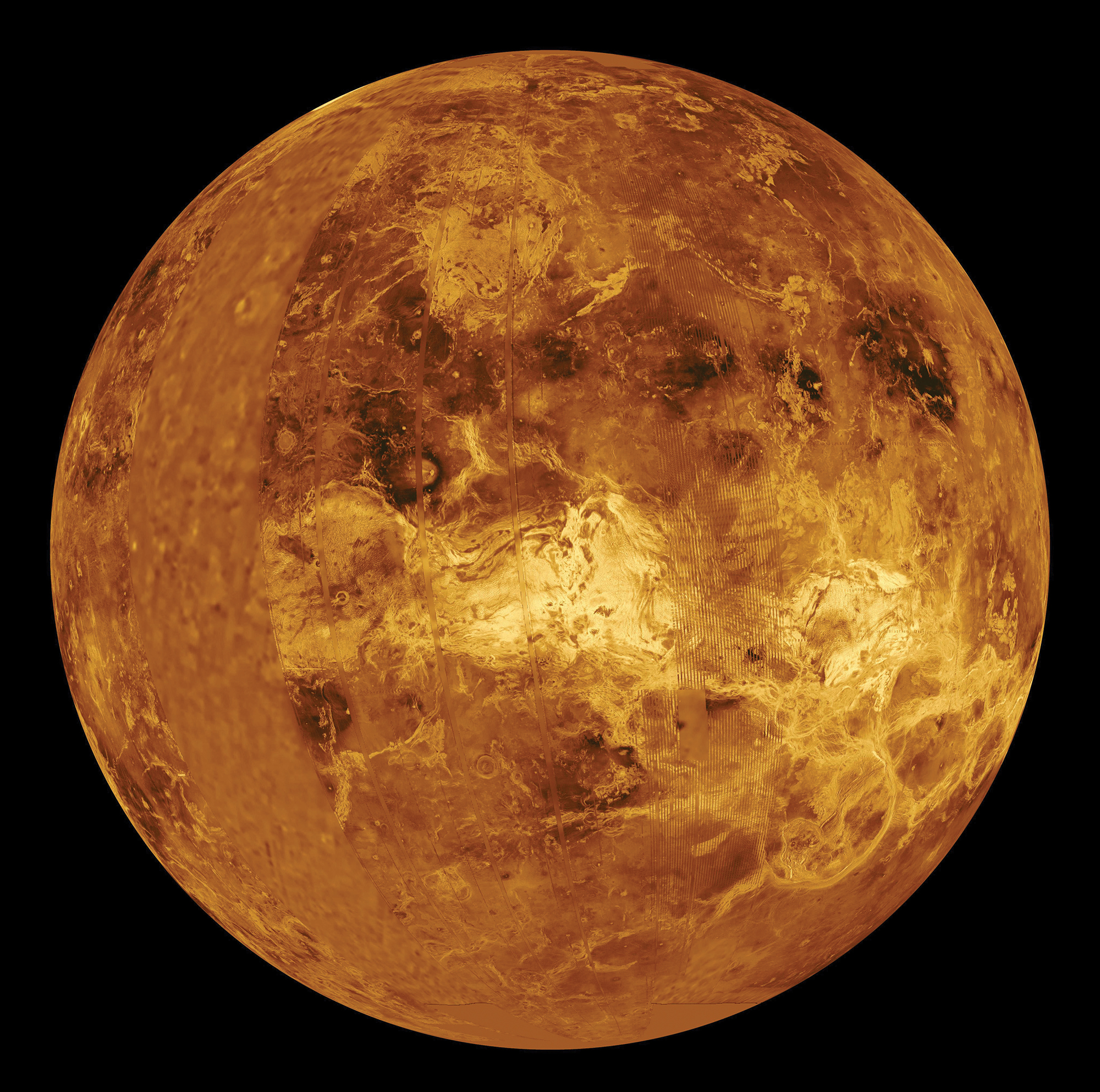
Globalt radarbilde av Venus. Den amerikanske romsonden Magellan kartla Venus’ overflate med radar. Magellan gikk i bane rundt Venus fra 1990 til 1994. Det lyse området midt på bildet er Ovda Regio, et fjellrikt område vest i det store, ekvatoriale høylandsområdet Aphrodite. De mørke områdene spredd utover venusslettene er svært jevne avleiringer fra store meteornedslag.
Lambdatrykk (NASA/JPL-Caltech)
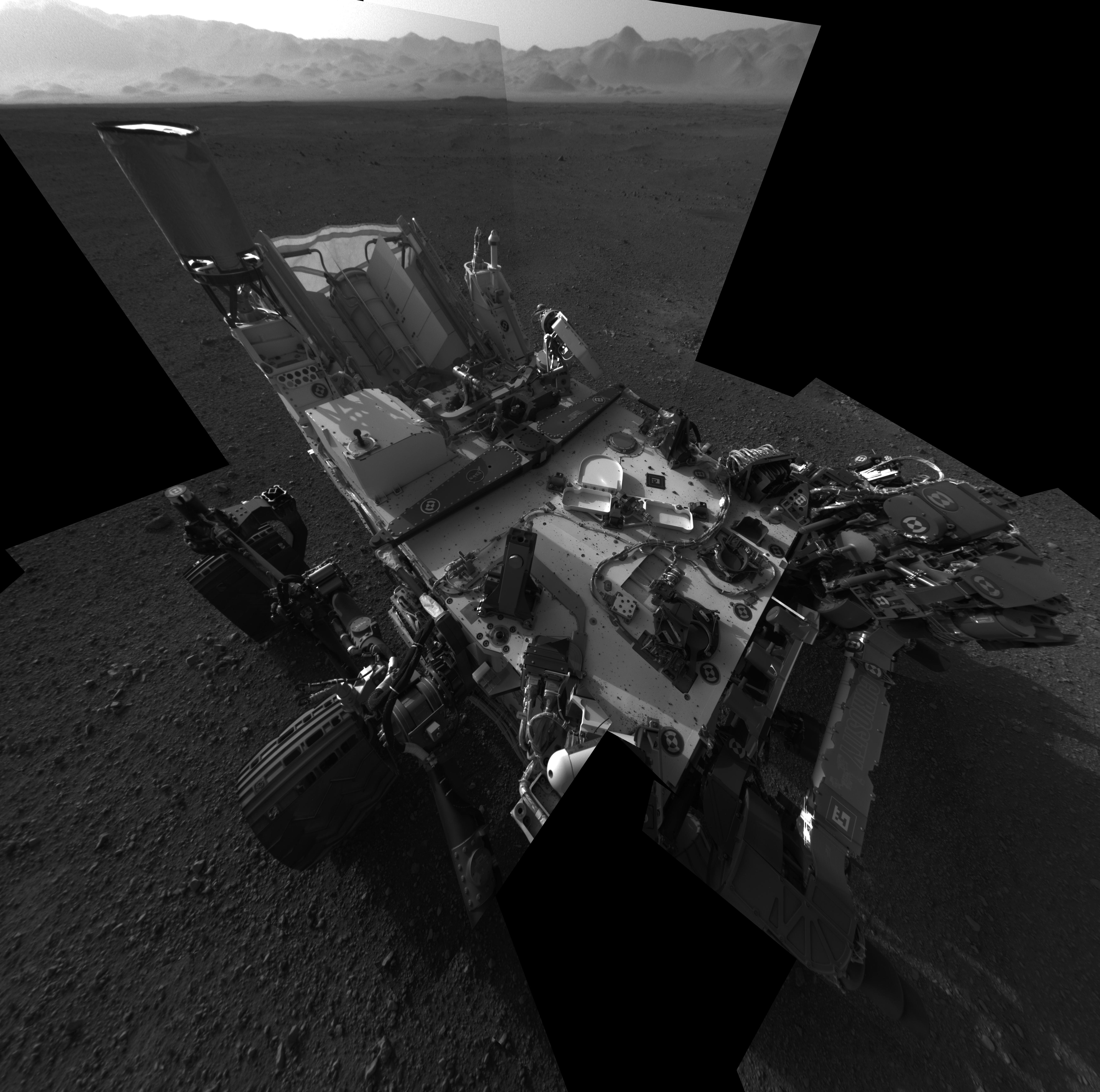
Selvportrett av Curiosity, NASAs nyeste marsbil. Bakenden på bilen ses øverst til venstre og to av kjøretøyets høyre hjul ses også til venstre. Den kuperte kanten til Gale-krateret er synlig som en lys stripe i bakgrunnen. Noen grusbiter er også synlige oppå marsroveren. Bildet er tatt 7. august 2012.
Lambdatrykk (NASA/JPL-Caltech)
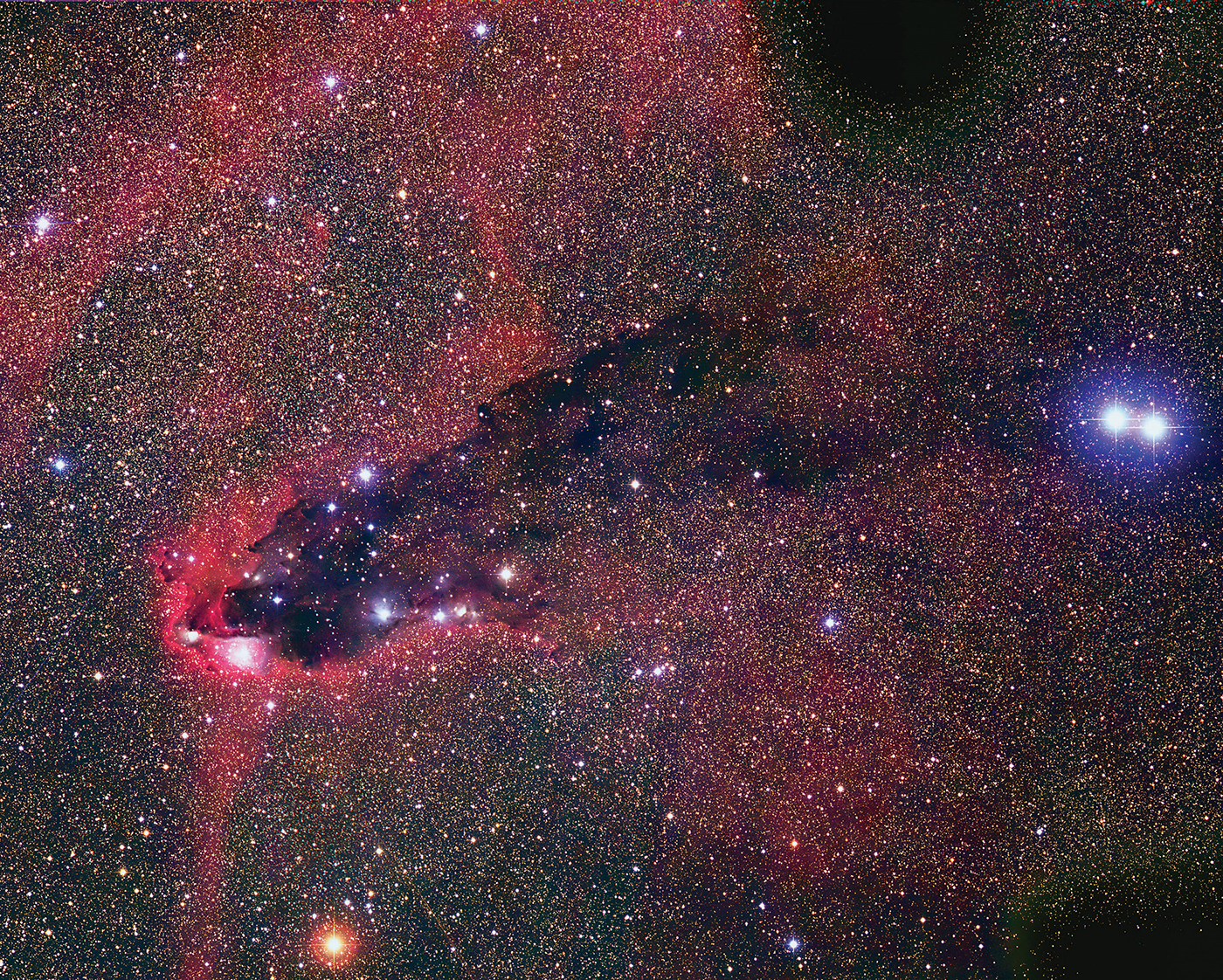
Denne snodige samlingen av ikke navngitte lyse og mørke tåker er massiv. Den bakoversvøpte formen skyldes stråling fra svært lyssterke stjerner (spesielt Scorpii zeta-1) i den åpne stjernehopen NGC 6231 (ikke i bildet), Scorpius OB-assosiasjonen med svært varme, unge stjerner. Hvis den mørke tåken i bildet er i samme avstand fra Solen som NGC 6321 (omkring 6000 lysår), så er den åpne hopen og den mørke skyen den fordamper minst 100 lysår fra hverandre. Retningen mot strålingskilden ses fra strømningsmønsteret i den mørke skyen og de utpregede, røde kantene (emisjonståker) hvor gassrikt støv utsettes for strålingen fra de varme stjernene i NGC 6321.
Lambda Print (Bilde og tekst (editert) © 2000-2010, Australian Astronomical Observatory/David Malin Images)
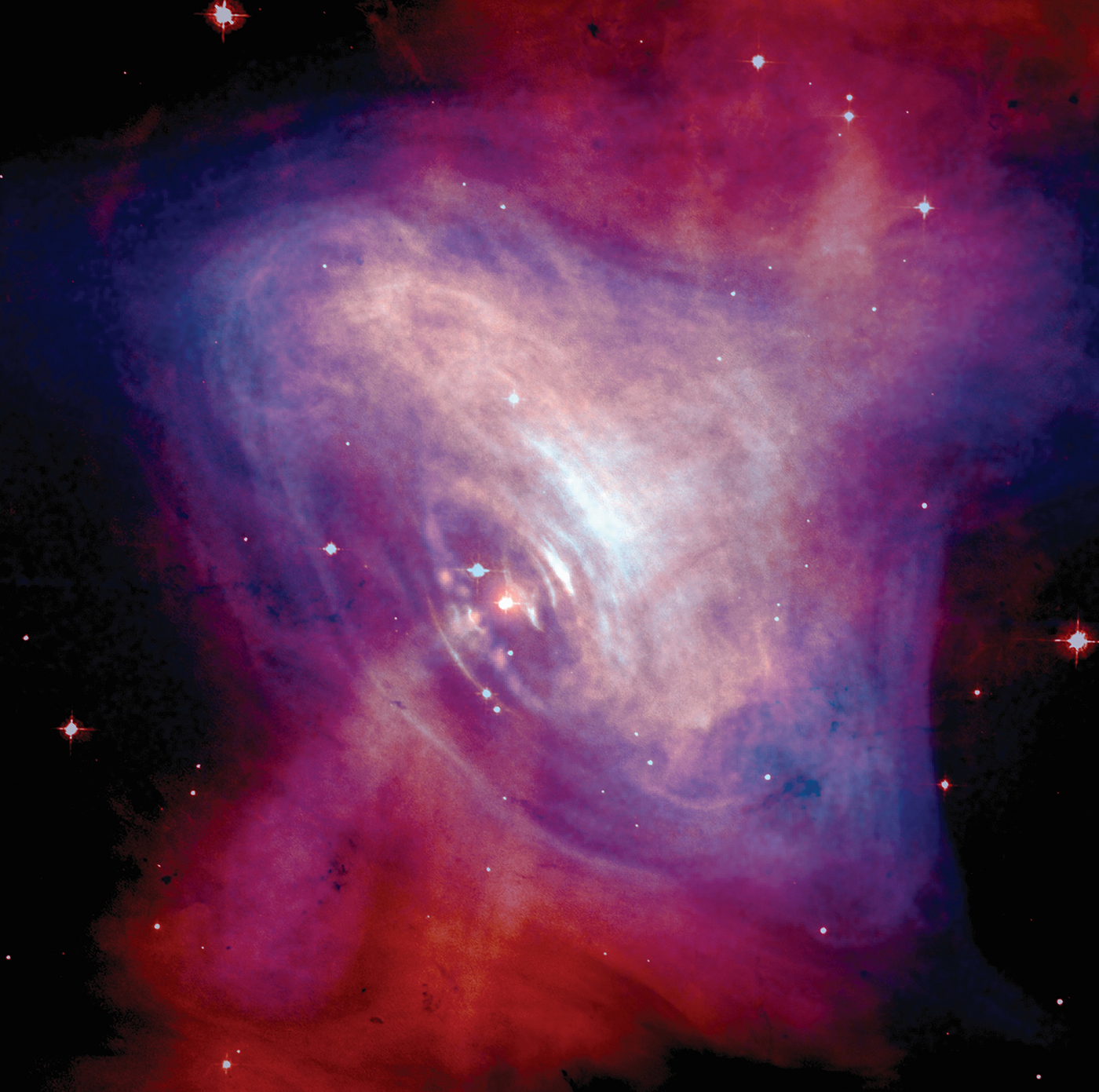
Et sammensatt bilde av Krabbetåken i røntgenstråling (blått) og synlig lys (rødt). Området som sender ut røntgenstråling, er mindre, siden de høyenergetiske elektronene som sender ut denne strålingen, stråler ut energien sin raskere enn elektronene med lavere energi, som sender ut synlig lys når de beveger seg. Den indre ringen er omtrent ett lysår i diameter.
Krabbetåken i stjernebildet Taurus (Tyren) er en supernovarest, etterlevningene etter en kjempestjerne med over åtte solmasser som endte sine dager i en gigantisk eksplosjon, en supernova. Eksplosjonen ble observert av kinesiske astronomer i år 1054. 6. april 2001.
Lambda Print. (Røntgen: NASA/CXC/ASU/J. Hester et al; Optisk: NASA/HST/ASU/J. Hester et al)
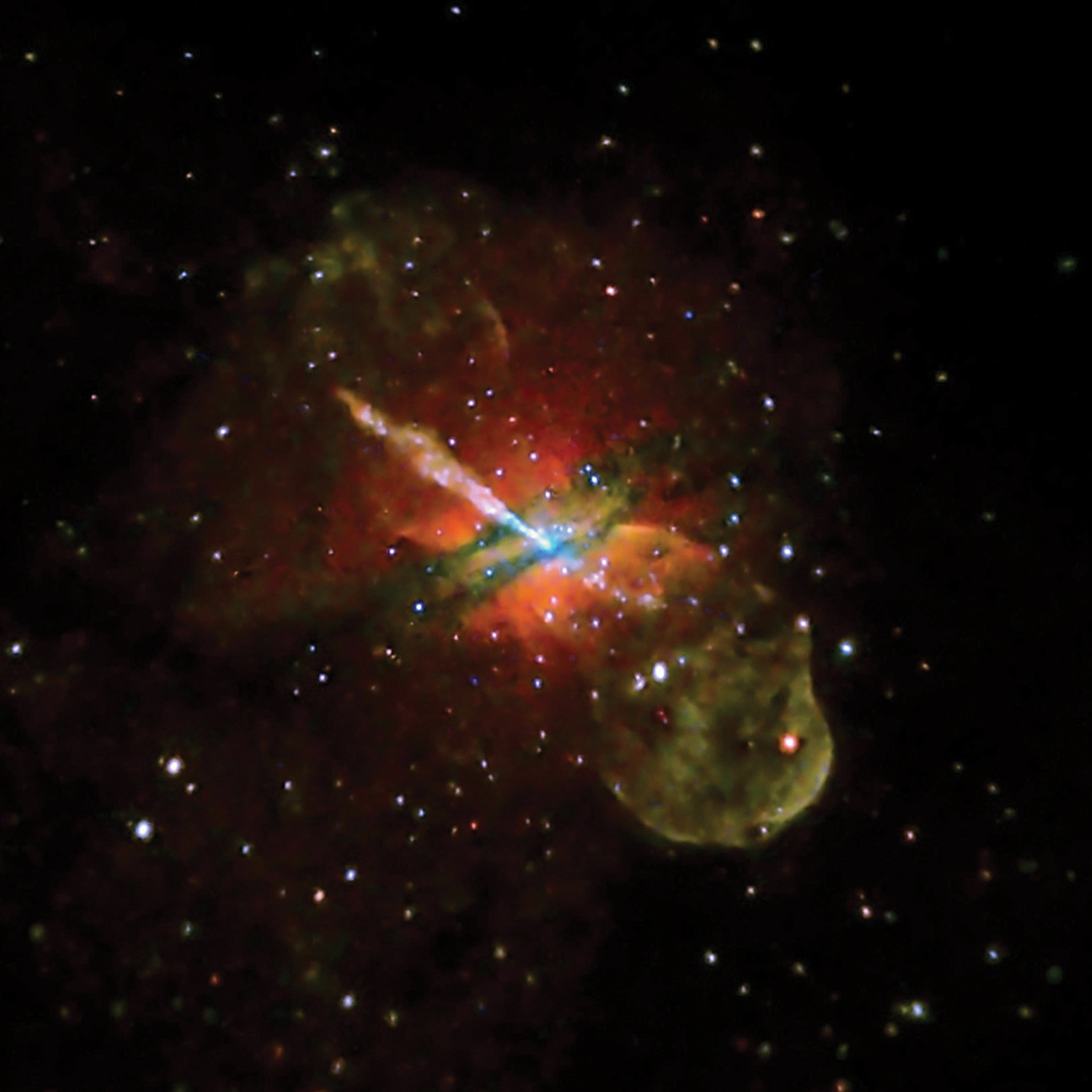
Dette bildet fremhever noen av de viktige egenskapene i Chandra-bildet av Centaurus A. Den aktive kjernen og startpunktet for jetstrålen finnes i sentrum av galaksen. Partiklene i jetstrålen og strålingen fra den aktive kjernen får begge sin energi fra et supermassivt sort hull. Jetstrålen ses opp mot venstre, og en kortere «motjet» peker i motsatt retning.
Lambda Print (NASA/CXC/CfA/R.Kraft et al)
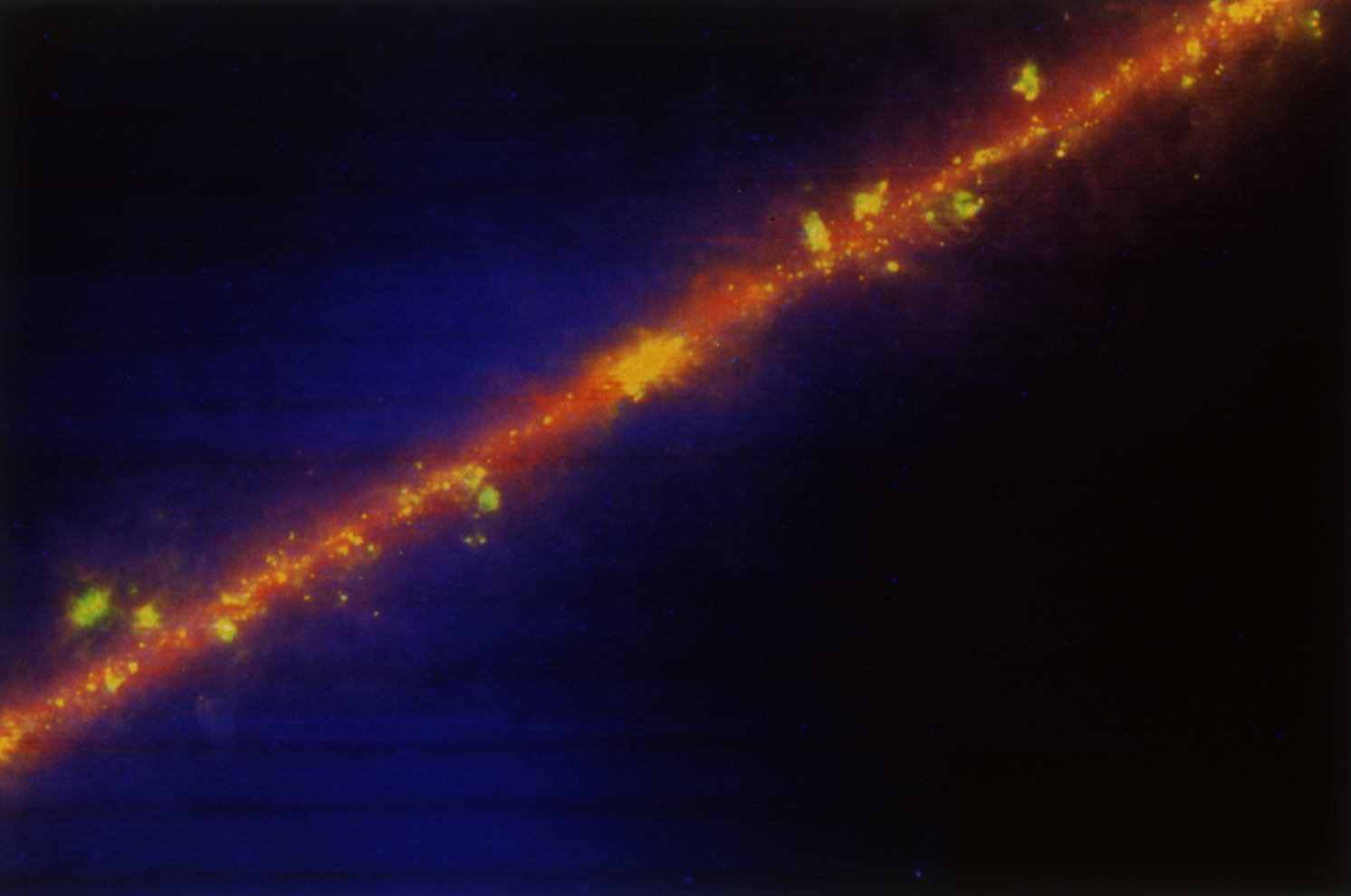
Den virkelige fasongen til galaksen vår vises i dette infrarøde bildet fra IRAS-satellitten. Infrarødt trenger lettere gjennom støvskyene i galaksen og viser at den, sett fra vårt ståsted inne i galakseplanet, ser ut som en tynn skive sett rett fra siden, akkurat som mange andre spiralgalakser vi observerer utover i Universet. De gule og grønne knutene og flekkene spredd langsmed galaksebåndet er skyer med interstellart gass og støv som varmes opp av nærliggende stjerner.1983.
Chromogenic Color Print (NASA/Ames Research Center)
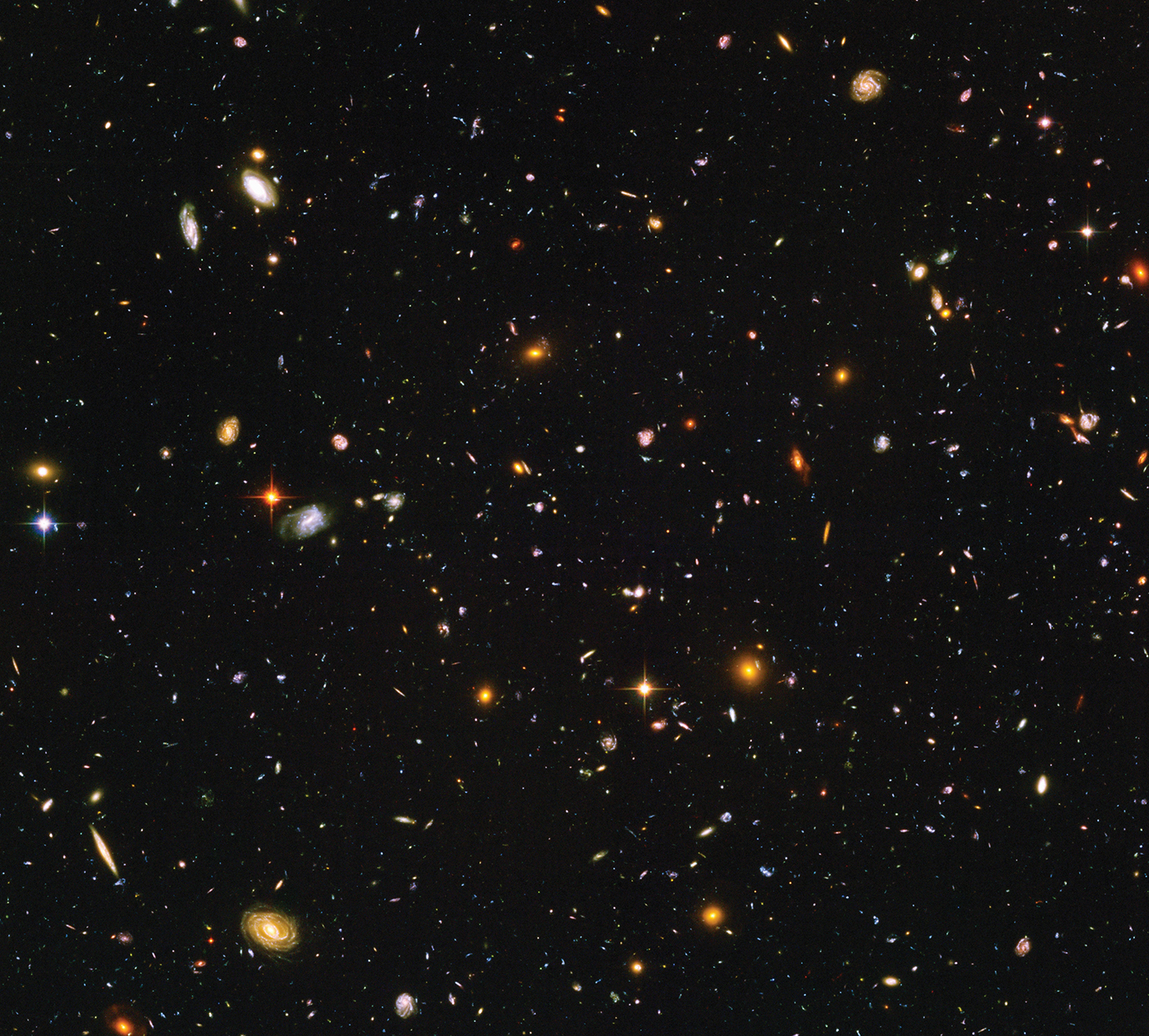
Hubble-teleskopet har foretatt flere svært lange eksponeringer, for å kunne se langt tilbake i tid og rom. I dette «Hubble Ultra Deep Field»-bildet finner vi flere objekter som har blitt identifisert som de lyssvakeste, mest kompakte galakser noensinne observert i det fjerne univers. De ligger så langt fra oss at vi ser dem slik de så ut mindre enn én milliard år etter big bang. Strålende med lys fra millioner av stjerner er hver av galaksene en hundredel til en tusendel av størrelsen til Melkeveien.
Lambda Print (NASA, ESA og N. Pirzkal (STScI/ESA)
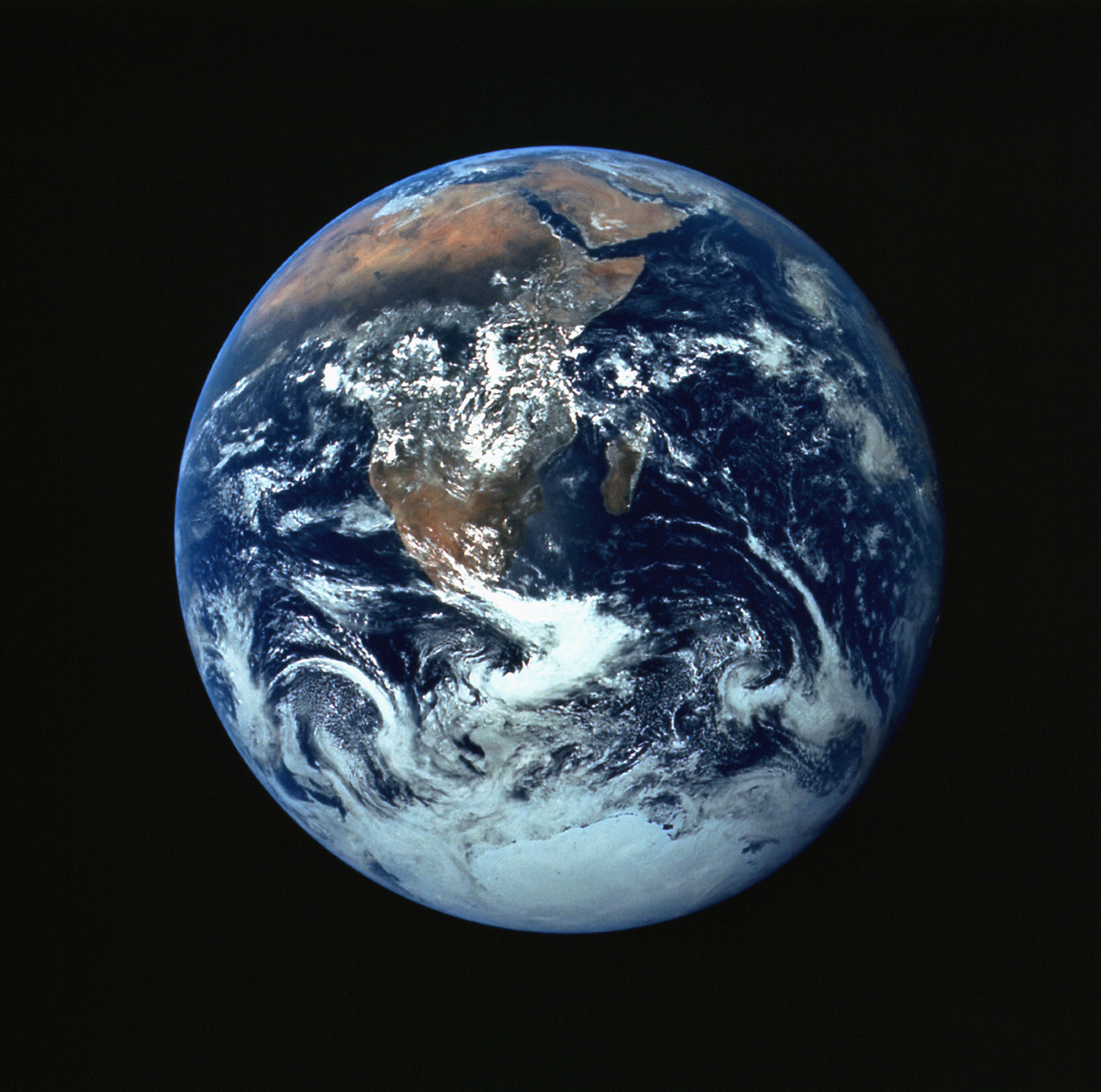
Bildet tatt fra Apollo 17, fanger alt vann, land og vær på den ene av jordens halvkuler. Dette fotografiet var det første som viste sørpolisen. Nesten hele Afrikas kystlinje er synlig, sammen med den arabiske halvøy. Apollo 17 var den siste av månelandingene i desember 1972.
(NASA/Johnson Space Center, courtesy of Mike Gentry)
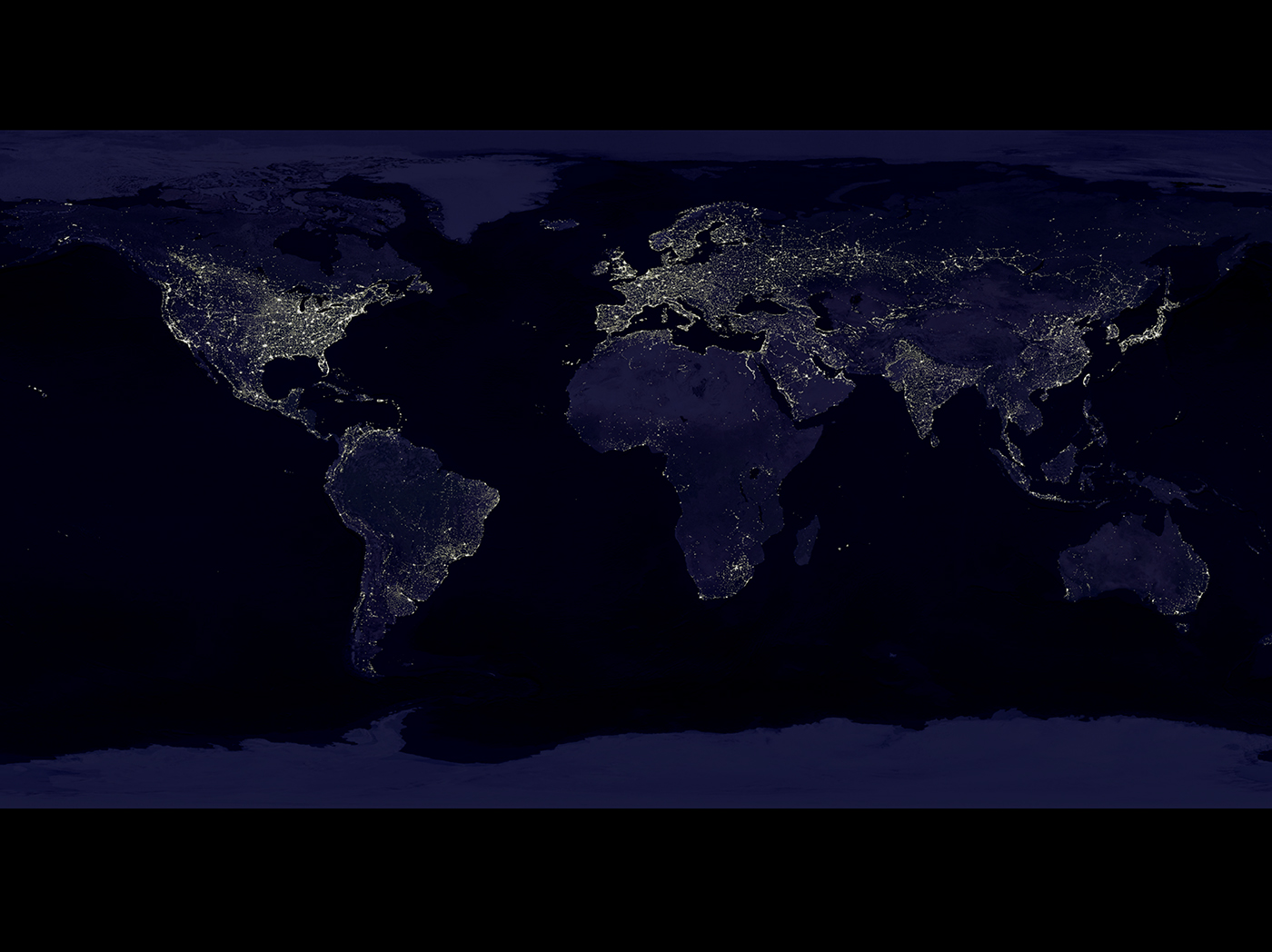
Dette bildet er egentlig en sammensetning av hundrevis av bilder laget av Defense Meteorological Satellite Program (DMSP). The Nighttime Lights of the World datasettet er samlet inn fra oktober 1994 til mars 1995. Denne animasjonen er avledet fra et bilde skapt av Craig Mayhew og Robert Simmon fra data levert av Christopher Elvidge ved NOAA National Geophysical Data Center.
(NASA/Goddard Space Flight Center Scientific Visualization Studio)
Dette bildet er sammensatt av tre kanaler (som lager kunstige farger), av UAVSARs polarimetriske data tatt over San Andreas forkastningen vest for San Mateo, California. Forkastningen er flere hundre kilometer lang og strekker seg fra øverst til venstre til nederst i høyre hjørne, delvis under Crystal Springs Reservoir vist i svart. Et jordskjelv på 6,9 på Richters skala inntraff på denne forkastningen i 1989.
(NASA/JPL-Caltech)
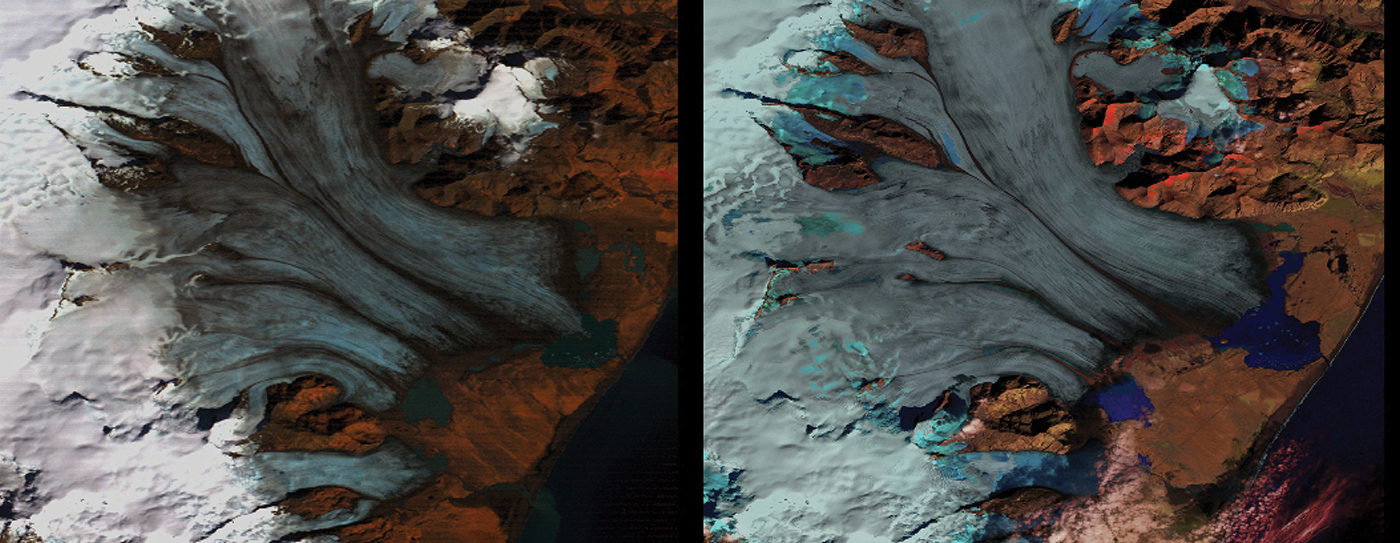
Dette bildet viser tilbaketrekking av isbreen Breidamerkurjokull på Island. Dataene fra 1973 er hentet fra Landsat 1 og data fra 2000 er fra Landsat 7. Nesten alle breer på jorda krymper, et sannsynlig resultat av global oppvarming. (NASA/Goddard Space Flight Center Scientific Visualization Studio)
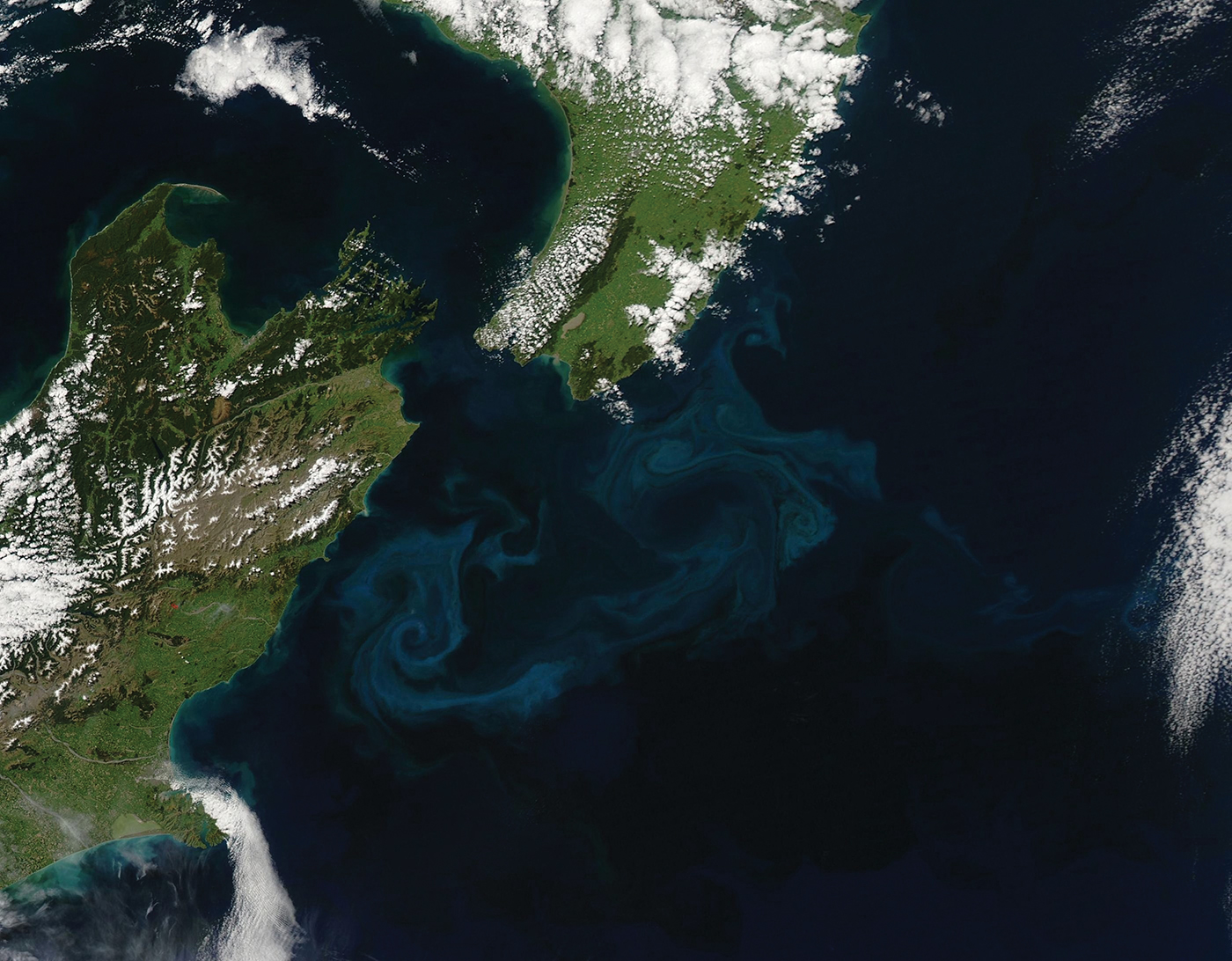
Utenfor østkysten av New Zealand, flyter elver av kaldt vann som har forgrenet seg fra Antarktis havstrømmer (Circumpolar Current), nordover forbi Sørøya og løper sammen med varmere vann som strømmer sørover forbi Nordøya. Fanget opp i virvler og strømmer, lager blomstrende planteplankton intrikate mønstre av blått og grønt som er spredt over tusenvis av kvadratkilometer av havoverflaten.
(NASA Earth Observatory, Rebecca Lindsey)
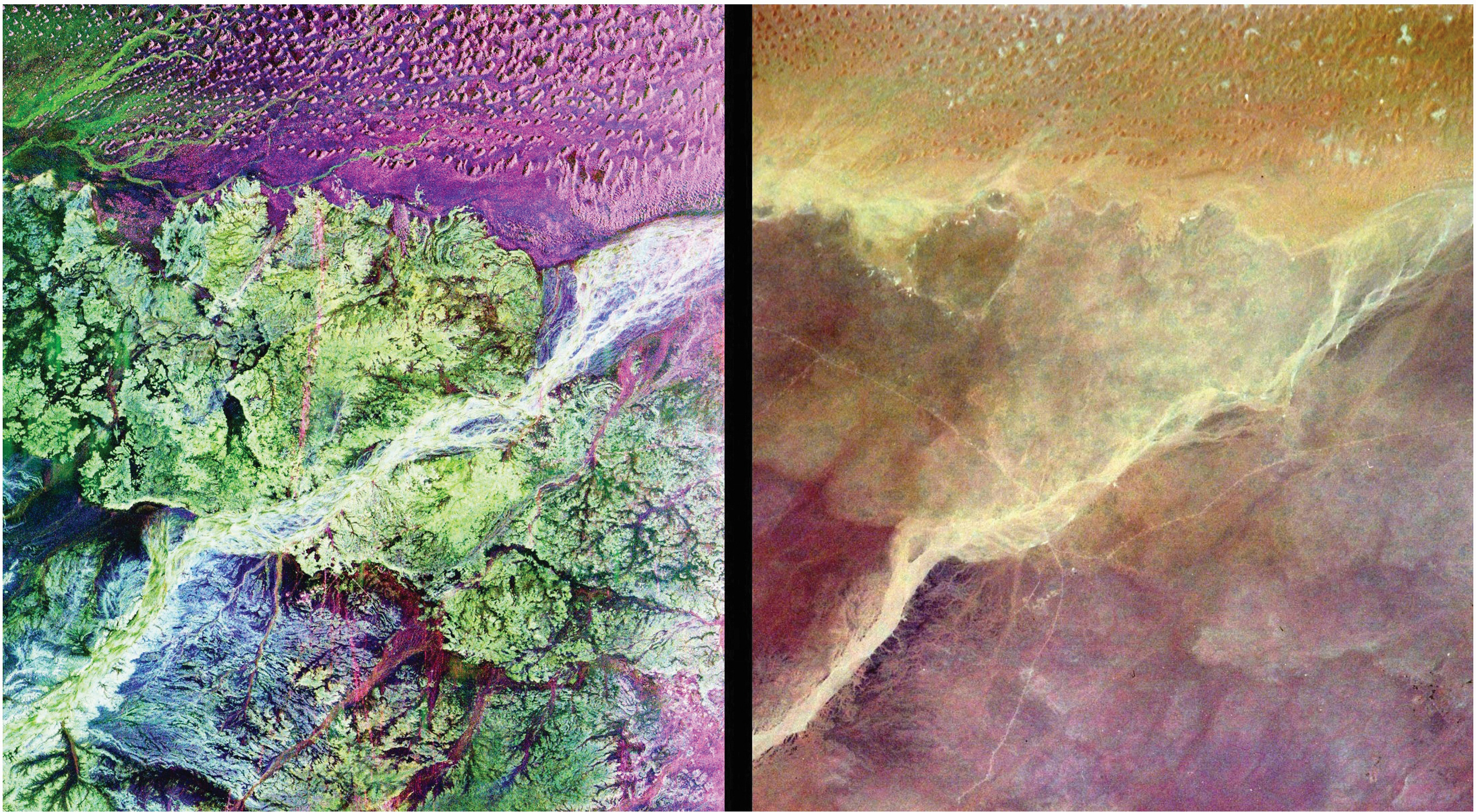
Disse to bildene fra verdensrommet viser en del av det sørlige Empty Quarter på den arabiske halvøya i landet Oman, den faktiske lokaliseringen av festningen til den tapte byen Ubar. Området er under utgraving. Radarbildene og de pågående feltundersøkelsene vil bidra til å belyse en tidlig sivilisasjon som vi vet lite om. (NASA/JPL-Caltech)
Den store Nordamerikatåken (også kalt NGC 7000 eller Caldwell 20) dekker et område på himmelen mer enn fire ganger så stort som fullmånen. Hvorfor man har gitt den dette navnet er lett å se. Tåken ligger i stjernebildet Cygnus (Svanen) og er en såkalt emisjonståke, det vil si en sky av ionisert gass som sender ut stråling på helt bestemte bølgelengder, avhengig av hvilke gasser den består av. Her ser vi hvordan Nord-Amerika-tåken ser ut i synlig lys.
Lambda Print (NASA/JPL-Caltech/L. Rebull (SSC/Caltech)
Første gang verden fikk se hvordan Jorden så ut fra et fartøy i nærheten av Månen var da den amerikanske romsonden Lunar Orbiter 1 overførte dette bildet til NASAs jordstasjon nær Madrid i Spania. Jordsigden ble fotografert 23. august 1966 da romfartøyet var i ferd med å passere bak Månen. Kromogent fargetrykk (NASA/JPL-Caltech)»
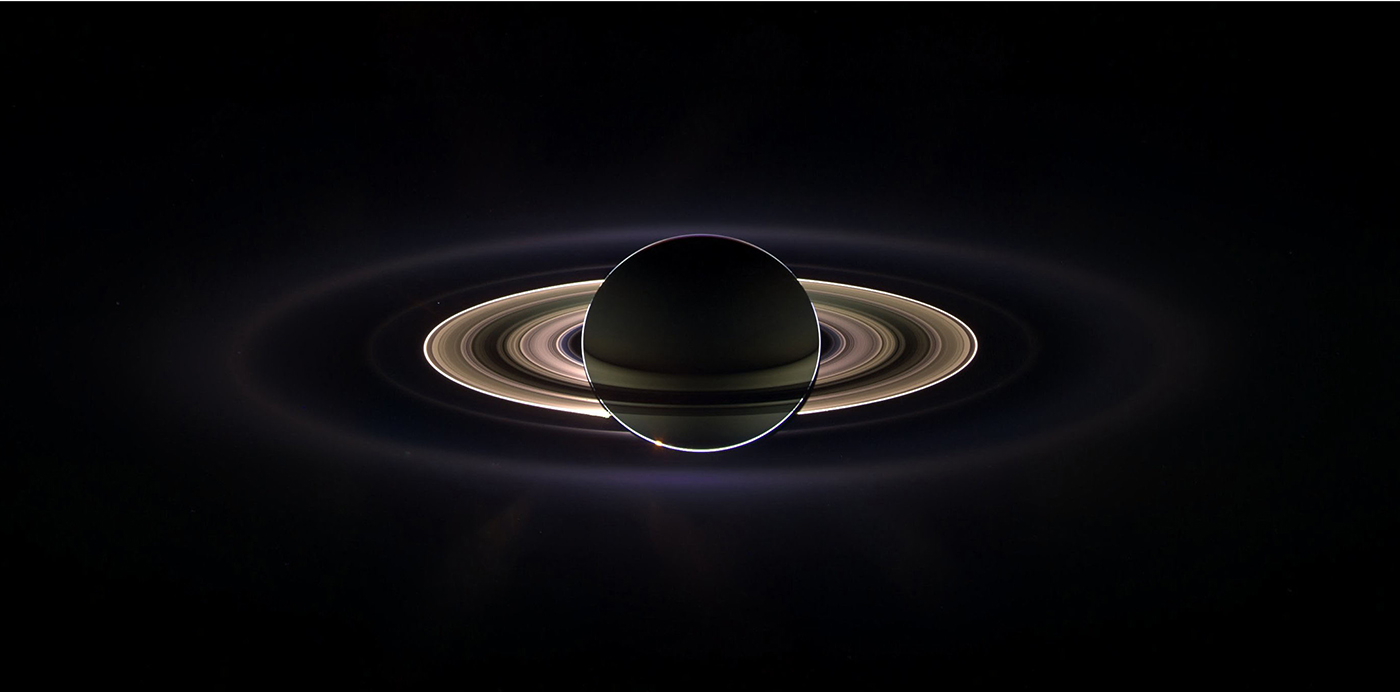
Mens kjempeplaneten Saturn skygget for det blendende sollyset kunne romsonden Cassini studere planeten og dens ringer som aldri tidligere. Tidligere ukjente ringer ble oppdaget, og vår egen hjemplanet kunne også skimtes som en liten prikk, til venstre rett over de lysende hovedringene. Dette flotte panoramabildet ble til ved å sette sammen 165 bilder tatt med Cassinis vidvinkelkamera i løpet av nærmere tre timer 15. september 2006. Fargene i bildet er generert ved å legge sammen bilder tatt gjennom ultrafiolett, infrarødt og klart filter og justere fargebalansen for å få tilnærmet naturlige farger.
Lambdatrykk (NASA/JPL-Caltech/Space Science Institute og Susanne Pieth, German Aerospace Center)
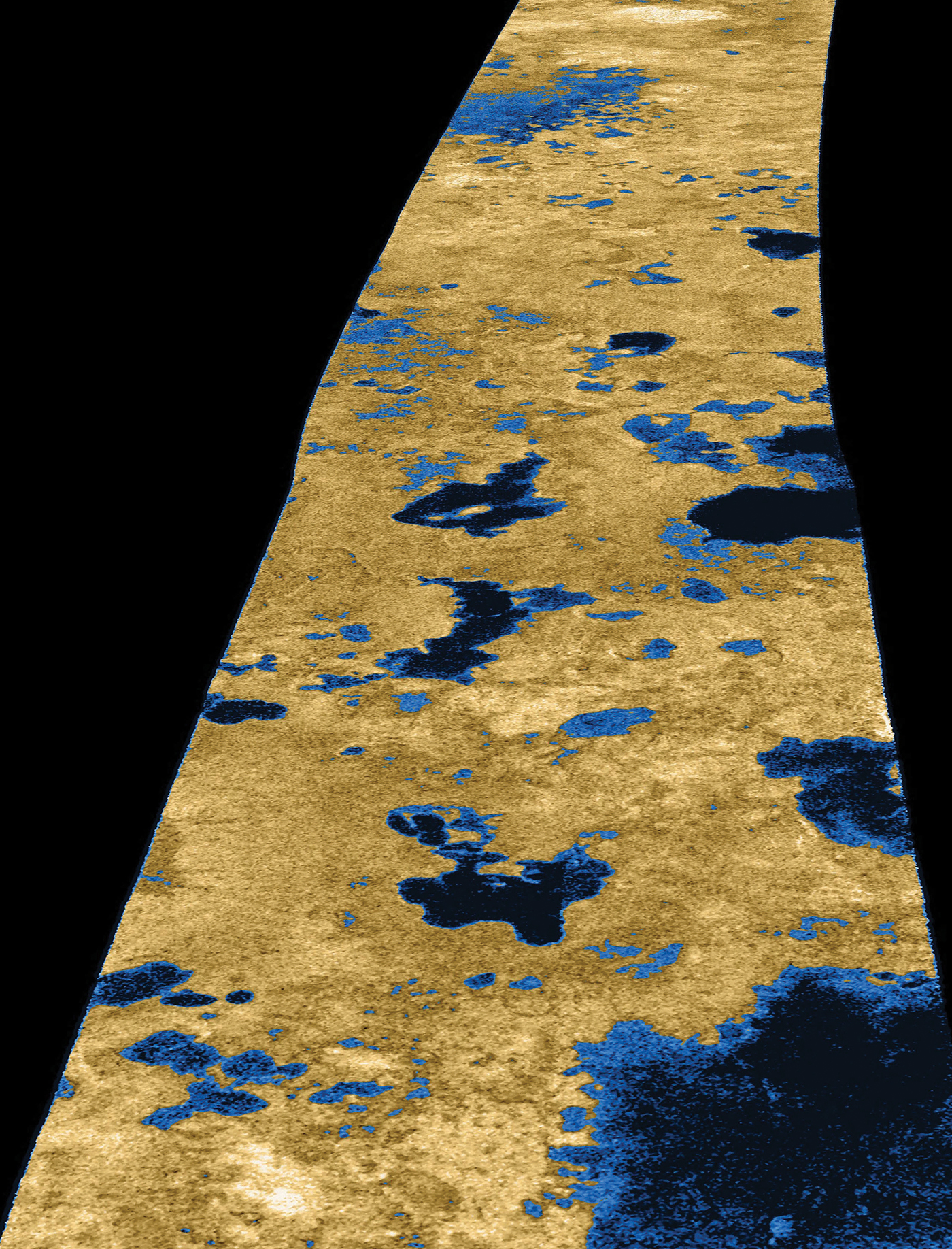
Eksistensen av hav og innsjøer med flytende metan var forutsett over 20 år tidligere, men det var ikke før Cassini fløy forbi Titan 22. juli 2006 at man fikk bekreftet at disse virkelig eksisterte. Radarbildene viste overbevisende tegn på store områder med flytende materiale. Intensiteten i dette fargelagte radarbildet er proporsjonal med hvor mye av radarsignalet som er reflektert tilbake til romsonden. Innsjøene er flate og reflekterer strålingen vekk fra senderen mens mer ujevnt terreng reflekterer mye av strålingen tilbake. Områder med lite refleksjon er fremhevet med blått, mens områder med mye tilbakestråling er gitt en lysebrun farge.
Lambda print (NASA/JPL-Caltech/USGS)